Ambiance Is the Product
I’ve mentioned this in almost every article I’ve written. It’s time to write about it directly.
When people choose a bar, they tell themselves it’s about the beer selection, the prices, the location. Maybe the TVs. And sure, all of those things matter at some level. But none of them are why people come back. People come back because of how a place made them feel. And how a place makes you feel is almost entirely ambiance.
I put ambiance above everything except customer service — and honestly those two things are so intertwined that separating them is almost pointless. Customer service is part of the experience. The music, the lighting, the temperature of the bar top, the height of the stool — that’s all part of the experience too. You’re not just selling beer. You’re selling a feeling.
Here’s how I think about building it.
LIGHTING IS STRATEGY
I am very particular about lighting. More particular than most people would expect a bar owner to be, honestly.
I don’t like bars that look like every color hit the wall at once — random posters, brown tables, black chairs, seventeen TVs going, no cohesion. That works for a sports bar chasing a specific crowd. It’s not what I’m building.
What I want is control. I want to walk into one of my bars and feel like the light was intentional.
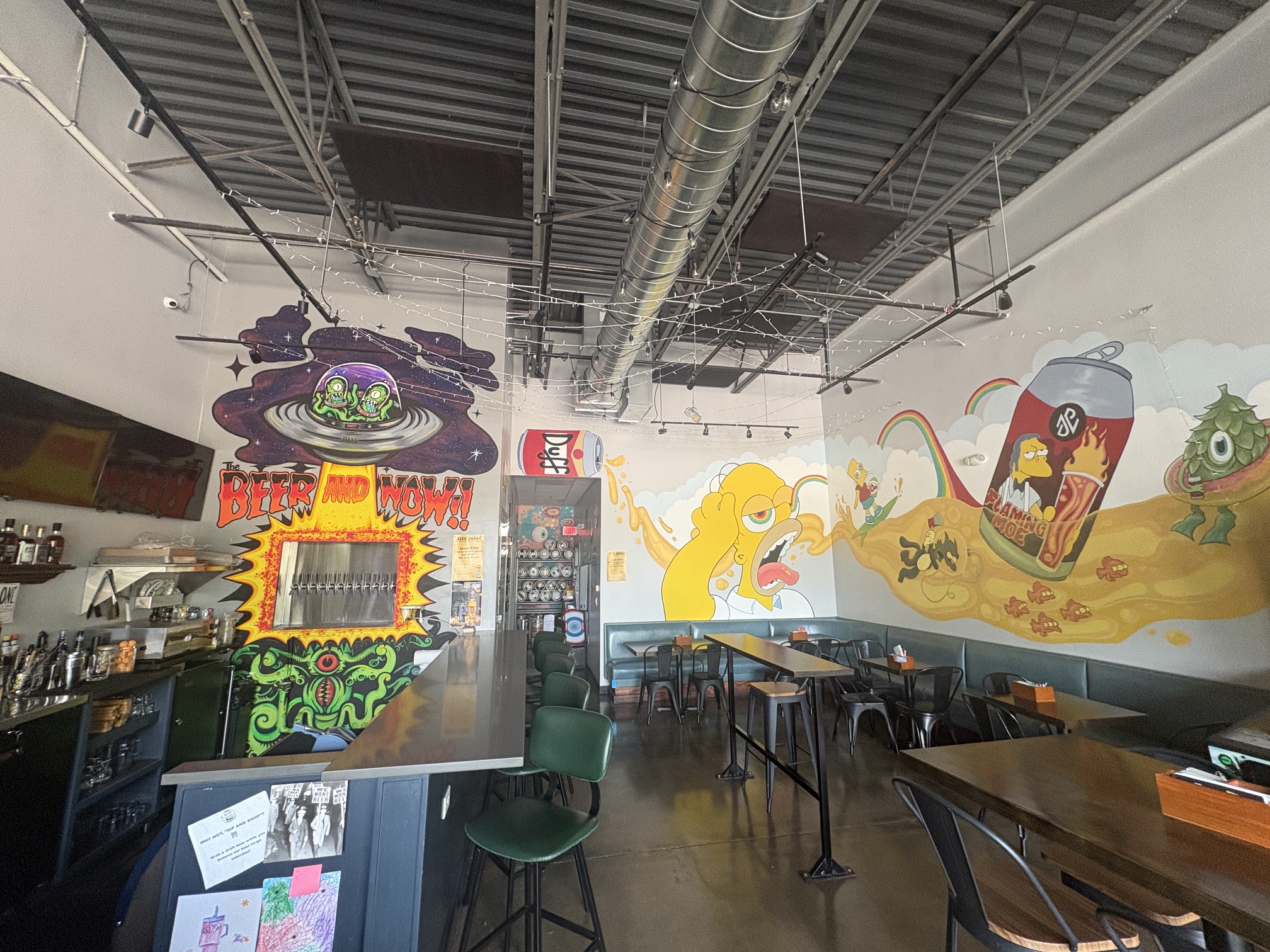
At The Beer and Now we have two Simpsons murals. Both of them pull that golden yellow color throughout the space. So when I was choosing lighting I specifically looked for the color temperature closest to that warm gold tone. When I was choosing neon beer signs I looked for ones that complemented that palette instead of fighting it. Everything should feel like it belongs.
At Windsor the walls are gray and the floor is dark charcoal. Gray is not a color I love — in fact I’ve written about how much I dislike gray bars. But since that’s what I inherited, I leaned into a solution: color washing. Every light in Windsor is red. Not accidentally red. Intentionally, specifically, committed-to-the-bit red. The goal was a dive bar that feels like a speakeasy — dark, dim, moody. The red lighting pulls everything together in a way that gray walls alone never would. It’s a filter over the whole room, like throwing a color grade over a photo in post production.
One color done well beats ten colors done randomly every time.
FURNITURE HEIGHT MATTERS MORE THAN YOU THINK
This one seems small. It is not small.
A while back I was at a bar in downtown La Grange. Sat in a booth. Sunk in so deep that the table felt like it was at shoulder height. I felt like a toddler. That four inch gap between where I expected to be and where I actually was ruined the entire visit for me. Not the beer. Not the service. The furniture.
Bar stool height to bar height. Chair height to table height. These are not aesthetic decisions — they’re comfort decisions. And comfort is dwell time. Dwell time is revenue. If someone feels physically awkward at your bar they are leaving sooner than they otherwise would. I guarantee it.
THE COUNTERTOP PROBLEM
I had a brief color theory lesson in art class, probably around seventh grade. One thing that stuck with me was how McDonald’s designs for throughput, not comfort. Stainless steel countertops — easy to clean, yes, but also cold and unwelcoming. You don’t linger at cold steel. You get up and leave. That’s the point for them. High volume, fast turnover, no loitering.
My game is the opposite. I want dwell time. I want people to stay, order another round, feel comfortable enough to lose track of time.
Which is why it drives me crazy that both of my bars have cold stone countertops. Windsor has granite. The Beer and Now has composite. Both feel cold to the touch. Both make a glass land with a sound and a feeling that is just slightly off — even with coasters. It’s subtle and most customers wouldn’t name it if you asked them, but their body knows.
A warm wooden bar top feels completely different. It feels like a place to settle in. I haven’t been able to change mine yet but it’s on the list.
SOUND IS DESIGNED TOO
Most bar owners treat music like an afterthought. Put something on, turn it up, done. But sound is strategy just like lighting is strategy.
Beats per minute affects how fast people eat and drink. Slower music means slower meals, longer stays, higher tabs. Faster music means higher turnover. High-end restaurants know this. They program their playlists with intention. You should too.
Volume is its own variable. Too quiet and you feel exposed — every conversation feels public. Too loud and you can’t talk, which means people leave when they finish their drink instead of staying for another because conversation is the point. The goal is loud enough to feel alive but soft enough that the person next to you doesn’t have to lean in to hear you.
And then there’s the theme piece. If you’ve built a 90s bar, your music should be 90s. Not mostly 90s. Not 90s with some current stuff mixed in when the bartender gets bored. Committed to the bit. Cohesion is what makes a concept feel real versus assembled.
If everything points the same direction — the lighting, the music, the decor, the furniture — customers feel it even if they can’t name it. That’s a well-produced concept. And a well-produced concept will beat a hodgepodge sports bar for the right demographic every single time.
THE POINT
You are not selling beer. Every bar in a five mile radius sells beer. You’re selling a feeling. The feeling comes from the ambiance. The ambiance is built from a hundred small intentional decisions that most bar owners never make because they’re too busy putting out fires.
Make the decisions. Control the lighting. Think about the countertop. Program the music. Get the furniture heights right.
The more time you spend producing the experience, the more it shows. And the more it shows, the longer people stay. And the longer people stay, the more they spend.
Ambiance is the product. Everything else is just inventory.


